

Article
How to Quiet an Anxious Mind Before Bed With Scripture
Notice anxious thoughts, ground your attention, and release the need to control tomorrow.
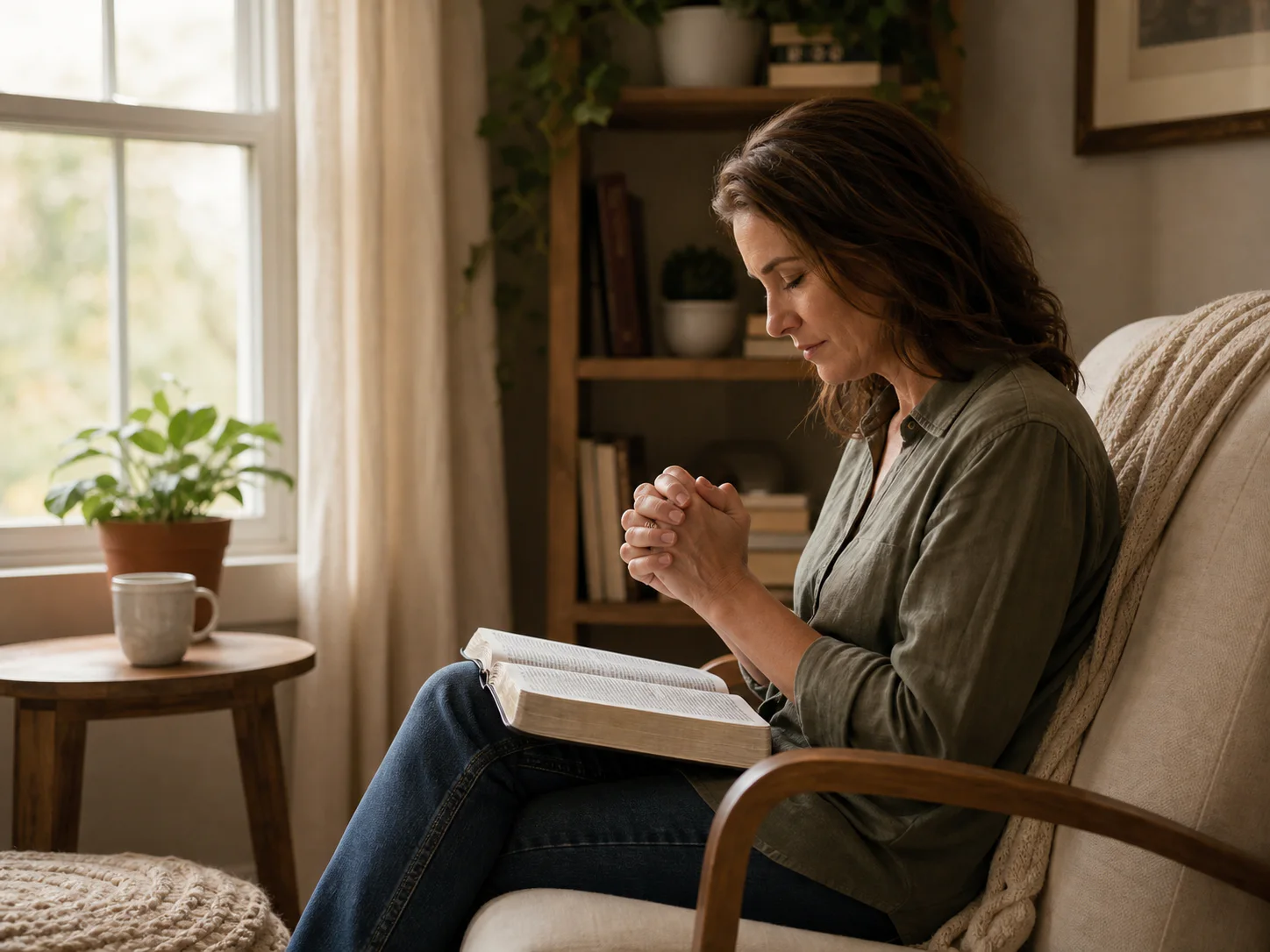
Anxiety often grows louder when the day's activity stops. That does not mean you are failing at faith or doing bedtime incorrectly. A quiet room may simply reveal concerns that movement kept in the background. Scripture can help you notice those concerns honestly, direct them toward God, and choose what deserves your attention now.
Name anxiety before trying to remove it
Philippians 4 is sometimes reduced to a command not to feel anxious. In context, Paul writes from confinement to a community facing pressure and disagreement. He points toward prayer, gratitude, disciplined attention, and practices learned over time. The passage describes a way of returning, not a demand for instant emotional change.
Begin by naming the thought precisely: a conversation, expense, health concern, deadline, or fear of being alone. Vague dread becomes more workable when it has words. Bring that sentence to God without exaggerating or minimizing it. You are not required to feel peaceful before you pray for peace.
Separate tonight from tomorrow
An anxious mind treats every future possibility as a present emergency. Ask two questions: Is there a safe action I need to take now? Is there a decision that truly must be made tonight? If the answer is no, write the concern down and choose a time tomorrow to revisit it.
This boundary is not denial. It recognizes that tired minds have less perspective and that many problems need daylight, information, or another person's help. Entrusting tomorrow to God can include a practical plan to return to the issue when you are better equipped.
Practice the attention of Philippians 4
Paul directs attention toward what is true, honorable, just, pure, lovely, and worthy of praise. This is not forced positivity. It is a refusal to let fear become the only narrator. Choose one category and remember one concrete example from the day: a true word, an act of kindness, or a moment of beauty.
Hold that example beside the concern, not instead of it. Christian hope can acknowledge trouble and still notice grace. If your mind returns to the fear, return gently to the passage. Repetition is part of practice, not proof that the practice failed.
Use Psalm 56 for honest fear
Psalm 56 repeatedly names fear and trust. The two appear in the same prayer, which means trust is not the absence of a frightened body. Read the whole psalm and notice how the writer addresses God, remembers God's attention, and speaks toward courage.
You can pray in the same pattern: name what frightens you, remember one aspect of God's character, and ask for the next faithful step. Keep the prayer concrete. ‘Help me make one wise call tomorrow’ may be more grounding than demanding certainty about every outcome.
Know when to seek additional support
Severe or persistent anxiety and sleep disruption deserve appropriate care. Scripture, pastoral support, counseling, and medical guidance can work alongside one another. None of these resources needs to be treated as a test of whether your faith is strong enough.
If anxiety is causing immediate danger, panic you cannot manage, or thoughts of harming yourself, contact local emergency or crisis support. BibleAlong offers spiritual reflection and prayer; it is not emergency or medical care and does not promise to cure anxiety or insomnia.
Reflect before resting
- What exact concern is asking for my attention?
- Does it require action tonight or a plan for tomorrow?
- What is one true and good thing I can notice without denying difficulty?
A prayer for tonight
God of peace, I bring you the thought that keeps returning. Show me what requires action and what I can release until tomorrow. Train my attention toward what is true and give me courage to seek wise help when I need it. Stay near in this quiet hour. Amen.